Table of Contents
- What varicose veins are
- Common causes and risk factors
- Symptoms to notice
- Does winter make varicose veins worse?
- How Ayurveda describes varicose veins
- Daily management that helps
- Yoga and movement
- Diet: what helps and what does not
- What about supplements?
- Medical treatments that close or remove the vein
- Can varicose veins be cured naturally?
- When to see a doctor
- Frequently asked questions
- The bottom line
You notice it first as a blue, rope-like vein behind the knee or along the calf. Later come the evening heaviness, ankles that look puffy by bedtime, and an itch over the vein that will not settle. Varicose veins are very common, especially in people who stand or sit for long hours, and they are often brushed off as a cosmetic issue. Sometimes they are. Sometimes they are an early sign of a circulation problem that deserves attention.
This guide explains what varicose veins are, why they form, how Ayurveda has described them, what you can do every day, and which treatments actually close or remove the problem vein.
01What varicose veins are
Veins carry blood from the legs back up to the heart, working against gravity. Two things make this possible: the squeezing of the calf muscles when you walk (often called the calf muscle pump) and small one-way valves inside the veins that stop blood falling back down.
When these valves weaken or leak, blood pools in the vein. Pressure rises, the vein wall stretches, and the vein becomes enlarged, twisted and visible under the skin. Doctors call the underlying problem venous reflux or chronic venous insufficiency.
Spider veins are tiny red, purple or blue thread-like veins near the surface. They are usually a cosmetic concern. Varicose veins are larger (generally 3 mm or more), bulging veins that are more likely to cause symptoms.
02Common causes and risk factors
- Age. Valves and vein walls lose elasticity over time.
- Family history. If a parent had varicose veins, your risk is higher.
- Long hours standing or sitting without moving: shop work, teaching, traffic police, salon and kitchen work, long desk jobs and long drives.
- Being overweight, which increases pressure in leg veins.
- Female hormones, which relax vein walls. Women are affected more often than men.
- Low physical activity, which weakens the calf muscle pump.
- A past blood clot (DVT) in the leg, which can damage valves.
03Symptoms to notice
- Visible, bulging, twisted veins, usually on the calf or inner thigh.
- Aching or a heavy, tired feeling in the legs, worse at the end of the day.
- Ankle swelling that improves overnight.
- Itching over the veins.
- Night cramps or restless legs.
- Skin changes near the ankle: brownish darkening, dryness, thickened or hardened skin.
- In advanced cases, an open sore near the ankle (venous ulcer) that heals slowly.
04Does winter make varicose veins worse?
Mostly, heat is the bigger trigger. Warm temperatures make veins widen, which is why many people feel more heaviness and swelling in summer. Winter brings its own risks, though: people move less, sit for long hours, and often keep their legs close to heaters or take very hot baths, all of which can increase swelling and itching. Very dry winter skin over a varicose vein also itches and cracks more easily. The practical message is the same in every season: keep moving, avoid direct heat on the legs and look after the skin.
05How Ayurveda describes varicose veins
Classical Ayurvedic texts describe a condition called siragranthi, a swelling or knotting of the veins (sira). It is explained mainly through vata, which governs movement, becoming disturbed and affecting the vessels and blood (rakta). Prolonged standing, overexertion and long walks are mentioned among causes, which matches what we know today about pressure in leg veins.
Traditional approaches described for siragranthi include rest with the legs raised, bandaging, oil application (abhyanga) over the legs without pressing hard on the vein, and in some Ayurvedic clinics, leech therapy (jalaukavacharana). Research on leech therapy for varicose veins is limited to small studies, and it should only be done by trained practitioners in a proper clinical setting.
Ayurveda does not offer a herb that can close a leaking valve or shrink a large varicose vein. Its useful role is in lifestyle, comfort and supporting general health, alongside proper medical evaluation.
06Daily management that helps
- Walk, and use your calves. A daily 30-minute walk strengthens the calf muscle pump. If you sit for work, do ankle pumps (point and flex the feet 15 to 20 times) every half hour.
- Raise your legs. Lie down and rest your legs above heart level on pillows for 15 to 20 minutes, two or three times a day.
- Change position often. Avoid standing still or sitting with legs crossed for long periods.
- Compression stockings. Graduated compression stockings squeeze the lower leg most and help blood move upward. They reduce aching and swelling for many people. Ask a doctor about the right pressure class and size, and do not use them if you have poor arterial circulation or diabetes-related nerve or skin problems without medical advice.
- Keep a healthy weight. Even modest weight loss reduces pressure on leg veins.
- Avoid direct heat on the legs. Do not sit with heaters pointed at your shins, and keep bath water warm rather than hot.
- Look after the skin. Moisturise dry skin daily and avoid scratching. Small cuts over varicose veins can bleed more than expected.
- Loose clothing around the waist and groin. Very tight waistbands can restrict blood return.
07Yoga and movement
Gentle practices that use the calves and raise the legs can help: ankle rotations, tadasana with heel raises, legs-up-the-wall pose (viparita karani, supported), and pawanmuktasana variations. Avoid long static standing poses if they increase heaviness. If you have had a blood clot or have heart problems, ask your doctor before inverted poses.
08Diet: what helps and what does not
No food can remove a varicose vein. Diet helps indirectly:
- Fibre and water prevent constipation. Straining raises pressure in abdominal and leg veins.
- Less salt reduces fluid retention and ankle swelling. Watch namkeen, pickles, papad and packaged snacks.
- Fruits and vegetables such as amla, citrus, berries, onions and leafy greens supply vitamin C and plant compounds that support blood vessel health.
- Weight-friendly meals help reduce pressure on veins over time.
09What about supplements?
Horse chestnut seed extract has been studied for chronic venous insufficiency, and research reviews suggest it can reduce leg pain and swelling in the short term. It is not an Ayurvedic herb, and it can interact with blood thinners, so it should only be used on a doctor's advice.
For general leg aches and muscle discomfort, some readers choose an Ayurvedic formulation such as Reliever Capsules, which contain Ashwagandha, Giloy and Harar and are described for joint and muscle comfort. They are not a varicose vein treatment and will not change the vein itself. Giloy has been linked to liver problems in some reports, so avoid it if you have liver disease, and check with a doctor if you take other medicines.
10Medical treatments that close or remove the vein
A doctor will usually order a venous Doppler (duplex) ultrasound to see which veins are leaking. Depending on the result, options include:
- Endovenous laser ablation (EVLA) or radiofrequency ablation (RFA): a thin catheter heats and seals the faulty vein from inside. Done under local anaesthesia, usually as a day procedure.
- Sclerotherapy or foam sclerotherapy: a medicine is injected to close smaller veins.
- Cyanoacrylate (glue) closure: a medical adhesive seals the vein.
- Phlebectomy: small bulging veins are removed through tiny cuts.
- Surgery (ligation and stripping): the older approach, now used less often.
After treatment, blood finds its way through healthier veins. Treatment does not stop new varicose veins forming over the years, so walking, weight and leg care still matter.
11Can varicose veins be cured naturally?
No home remedy, herb or exercise can repair damaged valves or make a large varicose vein disappear. Natural measures can reduce symptoms and slow progression. If the veins are causing pain, skin changes or ulcers, a vascular specialist can offer procedures that close the vein.
12When to see a doctor
- Pain, heaviness or swelling that affects daily life.
- Skin darkening, hardening or a rash near the ankle.
- A sore near the ankle that does not heal.
- A varicose vein that becomes hot, red, hard and tender (possible superficial thrombophlebitis).
- Bleeding from a vein. Press firmly with a clean cloth, raise the leg and seek care.
Go to emergency immediately if one leg suddenly becomes swollen, painful and warm (possible deep vein thrombosis), or if you have sudden breathlessness, chest pain or cough up blood.
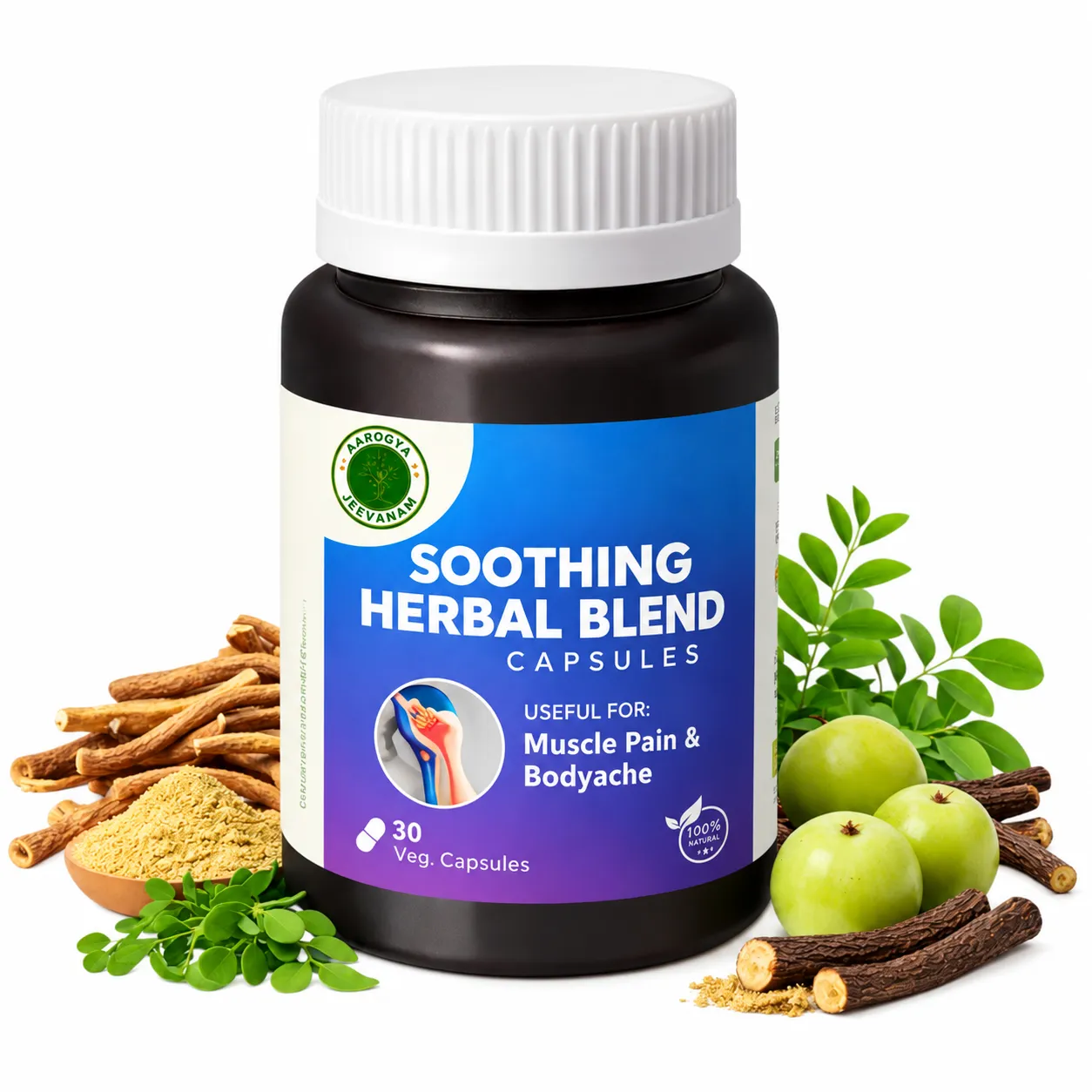
Soothing Herbal Blend Capsules
30 Veg Capsules
- 30 vegetarian capsules
- A herbal supplement, not a replacement for medical care
- Free shipping above ₹499 · Cash on delivery
13Frequently asked questions
Are varicose veins dangerous?
Many are not. But they can lead to skin damage, ulcers, bleeding and clots in some people, so symptoms and skin changes should be checked.
Do compression stockings cure varicose veins?
No. They support the veins while you wear them and reduce symptoms, but they do not repair valves.
Is laser treatment permanent?
The treated vein is usually closed permanently. New varicose veins can still develop elsewhere over time.
Should I massage my varicose veins?
Gentle oil application to the leg is fine for dry skin, but do not press or rub hard over bulging veins.
14The bottom line
Varicose veins come from leaking valves and pressure, not from anything you did overnight. Walking, raising your legs, compression, weight control and good skin care reduce symptoms for most people. Ayurveda's description of siragranthi supports the same lifestyle approach, but a Doppler scan and a specialist's opinion are the way to decide whether the vein needs closing.
This article is for general information and is not a substitute for medical advice. Sudden leg swelling with pain, or sudden breathlessness, needs emergency care.
Comments (1)